


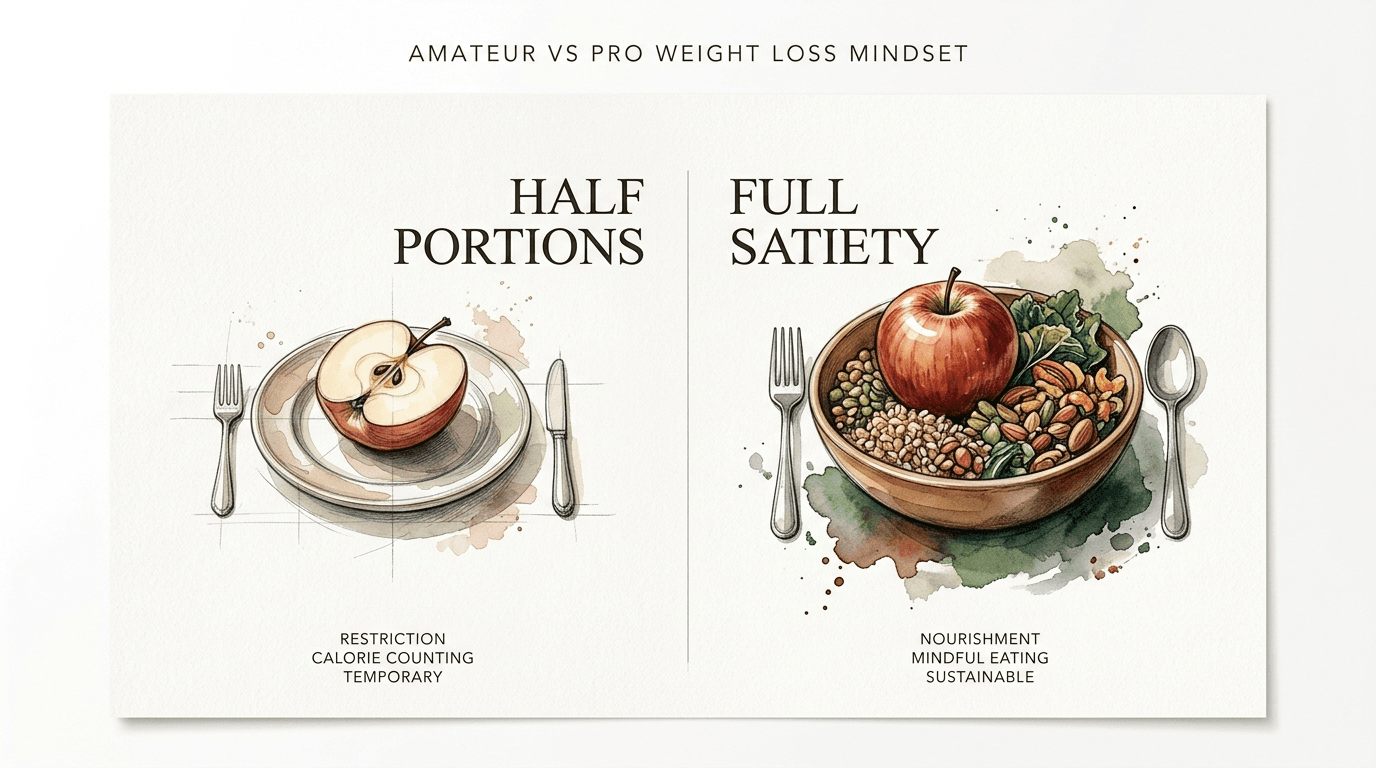
Amateurs focus on what they take away; pros focus on what they add in. The ‘Standard’ approach to weight loss is deprivation—tiny plates of food that leave you hungry an hour later. The ‘Pro’ approach is volume and density. Food freedom comes when you stop counting calories and start counting nutrients that actually signal to your brain that you are safe and full.
Most people treat weight loss like a game of subtraction. They cut out carbs, they cut out fats, and they ultimately cut out their own happiness. This creates a psychological vacuum that eventually leads to a binge. When you focus on what you are “allowed” to have versus what you “must” avoid, the entire mental game shifts from restriction to abundance.
Professional health seekers understand that biology always beats willpower. If your stomach is empty, your brain will eventually force you to eat. By choosing foods that take up massive physical space while providing high nutritional value, you can satisfy your body’s physical hunger signals without overshooting your energy needs. This is the secret to a sustainable lifestyle rather than a temporary diet.
Weight loss is not just a math problem involving calories in and calories out. It is a hormonal and neurological puzzle. When you solve for satiety first, the calorie deficit often takes care of itself. We are going to explore how to transition from the amateur mindset of hunger to the pro mindset of strategic volume.
Amateur Vs Pro Weight Loss Mindset
The amateur mindset is rooted in the belief that weight loss must feel like a sacrifice. If you aren’t suffering, you aren’t working hard enough. This “no pain, no gain” philosophy works for a few weeks, but it inevitably fails because the human body is wired for survival. Your brain interprets chronic hunger as a famine, which triggers a cascade of hormones designed to make you crave the most calorie-dense foods available.
Amateurs often focus on half portions. They take a standard meal and cut it in half, leaving them with 50% of the food and 100% of the hunger. This is where the cycle of “yo-yo dieting” begins. They lose weight quickly through sheer grit, but their metabolism slows down and their hunger hormones skyrocket, leading to a rebound that often leaves them heavier than when they started.
Pros look at the problem through the lens of nutrient density and volume. They ask, “How can I eat the largest possible plate of food for the lowest possible caloric cost?” This is a strategy of displacement. Instead of removing the foods they love, they displace them with high-volume, low-calorie options like leafy greens, cruciferous vegetables, and water-rich fruits. They prioritize protein to keep their muscles fueled and their appetite suppressed.
Real-world application of the pro mindset looks like a massive salad with a lean steak instead of a tiny hamburger on a white bun. Both might have the same calories, but the pro version fills the stomach, provides essential micronutrients, and prevents the “sugar crash” that leads to afternoon snacking. Pros focus on winning the day, not just the hour.
How Volume Eating Works
Your body has a sophisticated system for determining when you have had enough to eat. This system relies heavily on gastric stretch receptors located in the lining of your stomach and intestines. These mechanoreceptors, specifically intraganglionic laminar endings (IGLEs), send signals via the vagus nerve to the hypothalamus in your brain. When the stomach expands to a certain point, the brain receives a message that says “stop eating.”
Calorie-dense foods, like oils and processed snacks, provide high energy but very little physical volume. You can consume 500 calories of potato chips (about two handfuls) without ever triggering those stretch receptors. In contrast, 500 calories of steamed broccoli would require you to eat nearly three pounds of food. Most people would find it physically impossible to finish that much broccoli in one sitting because the stretch receptors would be screaming “full” long before the plate was empty.
Hormonal signaling is the second half of the equation. As food moves into the small intestine, your body releases hormones like Cholecystokinin (CCK) and Glucagon-like peptide-1 (GLP-1). These hormones slow down gastric emptying, meaning the food stays in your stomach longer. This keeps you feeling satiated for hours after your meal. High-fiber foods and lean proteins are the most effective at triggering this response.
The “Pro” technique involves front-loading meals with high-volume, low-density starters. Research in the journal Appetite has shown that eating a large green salad or a vegetable-based broth soup before a main course can reduce the total calorie intake of that meal by up to 20%. This works because of the 20-minute time lag between eating and the brain receiving the satiety signal. By the time the calorie-dense main course arrives, your “stop” signal is already partially active.
Benefits of the Pro Approach
The most immediate benefit of shifting to a volume-focused mindset is the elimination of biological hunger. When you are physically full, you are less likely to experience the intense cravings that lead to poor food choices. This leads to a state of “food freedom” where you are no longer a slave to your next meal. You eat because it is time to fuel, not because you are in a state of panic.
Energy levels remain remarkably stable throughout the day. Amateur diets often cause blood sugar spikes and crashes because they rely on small amounts of processed “diet” foods. The pro approach emphasizes whole foods that digest slowly. This provides a steady stream of glucose to the brain and muscles, preventing the mid-afternoon “brain fog” that many dieters accept as a normal part of the process.
Body composition also sees significant improvement. Because this method encourages high protein intake alongside massive amounts of vegetables, you are more likely to preserve lean muscle mass while losing body fat. Muscle is metabolically active tissue; the more you keep, the higher your resting metabolic rate remains. This makes long-term maintenance significantly easier.
Psychologically, the pro mindset removes the guilt associated with eating. When your plate is overflowing with colorful, nutrient-dense food, your brain perceives abundance. This shuts down the “deprivation mindset” that causes many people to obsess over “forbidden” foods. You aren’t “dieting”; you are simply fueling your body with the best possible materials.
Common Mistakes and Pitfalls
One of the most frequent errors is increasing fiber intake too quickly. Fiber is essential for satiety, but your gut microbiome needs time to adjust to a sudden influx of roughage. If you go from eating zero vegetables to two pounds of kale overnight, you will likely experience significant bloating, gas, and digestive discomfort. This often leads people to believe that “healthy eating doesn’t work for me.”
Another pitfall is ignoring the role of fats and proteins. While vegetables provide the volume, protein and healthy fats provide the long-term satiety and hormonal support. Some people try to “hack” the system by eating only massive amounts of salad with zero-calorie dressing. This might fill the stomach for an hour, but because there is no protein to suppress ghrelin (the hunger hormone), the hunger returns with a vengeance shortly after.
Over-reliance on “Frankenfoods” or ultra-processed high-volume snacks is a modern trap. These include zero-calorie noodles or highly processed “diet” breads that are puffed up with air. While these can be useful tools occasionally, they often lack the micronutrients your body needs to feel truly satisfied. Your cells don’t just want energy; they want vitamins and minerals to perform cellular functions.
Avoid the “all or nothing” trap. If you have a meal that isn’t perfectly high-volume or nutrient-dense, amateurs often see it as a “failed day” and spiral into a binge. Pros recognize that one meal is just a single data point in a lifetime of eating. They simply return to their high-volume strategies at the next meal without any emotional baggage.
Limitations and Realistic Constraints
Volume eating is not a universal panacea. For individuals with certain digestive conditions, such as Small Intestinal Bacterial Overgrowth (SIBO) or Irritable Bowel Syndrome (IBS), high volumes of fermentable fibers can cause severe pain and flare-ups. In these cases, a more tailored approach that prioritizes nutrient density over sheer physical volume is necessary.
Extreme athletes or people with exceptionally high caloric requirements may also find volume eating problematic. If you are a marathon runner or a high-level weightlifter needing 4,000 calories a day, trying to get those calories from broccoli and spinach would be a full-time job and would likely result in gastrointestinal distress. These individuals need more calorie-dense sources like nuts, seeds, and oils to meet their energy demands.
Environmental factors can also play a role. Fresh produce can be expensive or difficult to access in “food deserts.” While frozen and canned vegetables are excellent high-volume alternatives, they still require storage and preparation. The pro mindset involves being resourceful, but we must acknowledge that some environments make this strategy more challenging than others.
Social situations can sometimes make volume eating awkward. It is easy to build a massive plate at home, but at a restaurant or a dinner party, you may not have control over the portion sizes of the low-calorie components. Pros handle this by eating a high-volume snack (like an apple or a small salad) before they go out, ensuring they aren’t “starving” when they arrive at the event.
Comparison: Amateur vs. Pro Meals
The following table illustrates the difference in food volume and satisfaction between a typical amateur “diet” meal and a pro “volume” meal with the same caloric value.
| Feature | Amateur “Diet” Meal | Pro “Volume” Meal |
|---|---|---|
| Food Examples | Half a turkey sandwich on white bread, a small bag of low-fat chips. | 4 oz Grilled chicken, 3 cups of spinach, 1 cup of cucumber, half an avocado, and a bowl of vegetable soup. |
| Approx. Calories | 450 Calories | 450 Calories |
| Weight of Food | Approx. 200 grams | Approx. 800+ grams |
| Satiety Duration | 60 – 90 Minutes | 3 – 5 Hours |
| Micronutrient Density | Low | Very High |
Practical Tips for Implementation
Start with the 50/50 Plate Rule. For every meal you eat, ensure that at least 50% of the plate is covered in non-starchy vegetables. This automatically builds volume into your day without requiring complex calculations. If you are eating pasta, mix in an equal volume of spiralized zucchini or steamed broccoli. You get the flavor of the pasta but twice the physical satisfaction.
Master the art of “food swaps.” Instead of regular rice, try cauliflower rice. Instead of heavy cream in sauces, try blended silken tofu or Greek yogurt. These swaps allow you to keep the textures and flavors you enjoy while significantly reducing the calorie density. The goal is to find replacements that satisfy your palate, not just your stomach.
Hydration is the ultimate volume secret. Drinking a large glass of water or herbal tea before and during your meal adds weight to the stomach contents, which helps trigger stretch receptors more effectively. Water also helps the increased fiber move through your digestive tract smoothly, preventing the aforementioned bloating issues.
Slow down your eating pace. It takes roughly 20 minutes for the hormones released in your gut to reach your brain and signal fullness. If you finish a calorie-dense meal in five minutes, you will likely feel hungry for another 15 minutes, leading you to reach for seconds. By chewing thoroughly and pausing between bites, you allow your biology to keep up with your fork.
Advanced Considerations
Serious practitioners often look at Protein Leverage Theory. This theory suggests that humans will continue to eat until they meet a specific protein threshold. If your diet is low in protein, you may find yourself constantly hungry regardless of how much vegetable volume you consume. Pros aim for roughly 1.6 to 2.2 grams of protein per kilogram of body weight to maximize satiety and muscle preservation.
The gut-brain axis plays a massive role in long-term success. A diet high in diverse plant fibers feeds the beneficial bacteria in your microbiome. These bacteria produce short-chain fatty acids (SCFAs) like butyrate, which have been shown to improve insulin sensitivity and further regulate appetite hormones. Moving beyond just “volume” to “diversity” is the hallmark of an advanced practitioner.
Circadian rhythm and meal timing can also be optimized. Some research suggests that our bodies are more efficient at processing nutrients and signaling satiety earlier in the day. “Front-loading” your calories—eating a large, high-protein, high-volume breakfast and lunch—may help prevent the late-night snacking that derails many weight loss efforts.
Monitoring non-exercise activity thermogenesis (NEAT) is crucial. When people go into a significant calorie deficit, their bodies often compensate by making them move less (fidgeting less, taking the elevator instead of stairs). By staying full and energized through volume eating, you can maintain a higher level of NEAT, which keeps your total daily energy expenditure (TDEE) high.
Real-World Scenario: The Office Lunch
Imagine two colleagues, Alex and Sam, both trying to lose weight. Alex is using the amateur approach of deprivation. He brings a small “diet” frozen entree that is 300 calories. It takes him four minutes to eat. By 2:00 PM, he is starving, irritable, and eventually eats two donuts from the breakroom because his willpower has evaporated.
Sam uses the pro approach. She brings 300 calories worth of food, but it looks very different. She has a massive container filled with three cups of mixed greens, chopped peppers, and cherry tomatoes. On top, she has 4 ounces of lean grilled chicken and a side of balsamic vinaigrette. She also has a small apple. It takes her 20 minutes to chew through all that fiber. Her stomach is physically distended in a healthy way, her protein needs are met, and she feels energized throughout the afternoon. She walks right past the donuts without a second thought.
The difference isn’t willpower. The difference is strategy. Sam used the physics of her stomach and the chemistry of her hormones to make the “right” choice the “easy” choice. This is the essence of moving from an amateur to a pro.
Final Thoughts
Sustainable weight loss is never about how much you can endure; it is about how well you can nourish yourself. When you shift your focus from taking food away to adding volume and density in, you stop fighting your biology and start working with it. This transition from an amateur mindset of lack to a pro mindset of abundance is the key to lasting change.
Experiment with these principles starting at your very next meal. Load up on the greens, prioritize your protein, and drink plenty of water. You will likely find that you can eat more food than you ever thought possible while still moving closer to your health goals. This isn’t just a diet; it is the path to true food freedom.
Consistency over time beats intensity in the short term. By building a lifestyle around these “pro” habits, you create a system where success is the default setting. Stop counting every leaf of spinach and start celebrating the fact that you can finally eat until you are truly, deeply full.
Sources
1 ivanachapman.com | 2 workingagainstgravity.com | 3 henryford.com | 4 simplydesserts.us | 5 forbes.com | 6 aloeproductstore.com | 7 weightandwellness.com | 8 wikipedia.org | 9 longevity.technology | 10 emerald-nutrition.com | 11 omadahealth.com