


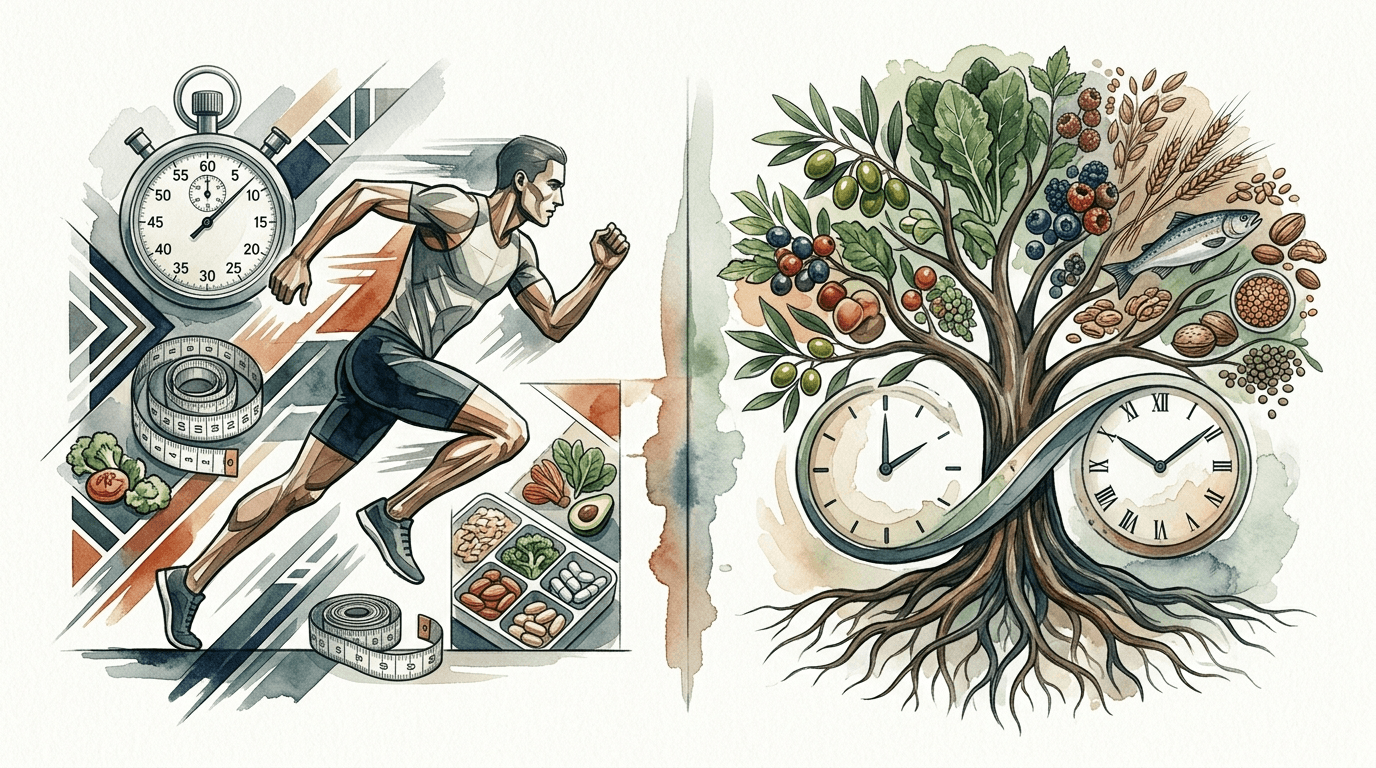
If your diet has an expiration date, your results will too. We have been trained to eat for the next 30 days, but we were built to live for the next 30 years. When you trade temporary aesthetic goals for a legacy of mobility and energy, the weight doesn’t just fall off—it stays off because it no longer serves the woman you’ve become.
This transition isn’t just about changing what is on your plate. It is about changing the cellular environment of your entire body. Most of us have spent years chasing a number on the scale while inadvertently accelerating our biological aging. We cut calories to the bone, ignored protein needs, and lived on “diet” foods that were little more than chemicals in a wrapper.
The tide is shifting. Modern science is proving that the way we eat can either act as a slow-motion wrecking ball or a precision-engineered fountain of youth. This guide will help you bridge the gap between looking good today and feeling unstoppable for decades to come.
Eating For Longevity Vs Weight Loss
Eating for weight loss usually centers on a single metric: the caloric deficit. In this paradigm, 100 calories of processed crackers are often viewed as identical to 100 calories of wild-caught salmon. The focus is purely on the scale. Success is defined by how much of yourself you can subtract.
Eating for longevity flips this script. It focuses on the quality of biological signaling. Every bite you take sends a message to your genes. These messages tell your body to either grow and repair or to store fat and inflame. Longevity nutrition prioritizes the preservation of lean muscle mass, the optimization of cellular recycling, and the stabilization of blood sugar.
In the real world, weight loss diets often lead to “skinny fat” outcomes—a loss of weight that includes precious muscle and bone density. Longevity-focused eating ensures that as you lean out, you are actually getting stronger. It is the difference between a house that looks freshly painted but has a crumbling foundation and a home built with reinforced steel and timeless architecture. Weight loss becomes a side effect of a high-functioning metabolism rather than a forced result of deprivation.
The Mechanics of Cellular Health
To eat for the long haul, you must understand two master switches in your body: mTOR and AMPK. These pathways dictate how your cells respond to nutrients.
The mTOR Pathway: The Growth Engine
The Mechanistic Target of Rapamycin (mTOR) is your body’s primary anabolic sensor. When you eat protein—specifically amino acids like leucine—and engage in resistance training, you flip the mTOR switch to “on.” This is essential for building muscle and bone. However, chronic over-activation of mTOR through constant overeating and high sugar intake is linked to accelerated aging and cellular waste buildup.
The AMPK Pathway: The Repair Crew
AMP-activated protein kinase (AMPK) is the opposite. It is your metabolic “fuel gauge” that turns on when energy is low, such as during fasting or intense exercise. AMPK triggers a process called autophagy. This is essentially cellular housekeeping where your body recycles damaged proteins and “zombie” cells. A longevity diet balances the growth of mTOR with the repair of AMPK.
Metabolic Oscillation
Research from 2024 and 2025 suggests that the secret to a long healthspan is metabolic oscillation. You do not want to be in a permanent state of growth, nor do you want to be in a permanent state of repair. Successful longevity involves cycling through these states. You eat to fuel your activity and build muscle, then you allow periods of rest and lower intake to let your body clean itself up.
Building the Legacy: The Longevity Action Plan
Moving from a weight-loss mindset to a longevity mindset requires a tactical shift in how you structure your daily nutrition.
Prioritize Protein for Muscle Preservation
Muscle is the currency of longevity. As women cross the age of 40, they face “anabolic resistance.” This means the body becomes less efficient at using protein to maintain muscle. Recent studies suggest that while the standard RDA for protein is 0.8g per kilogram of body weight, women focused on longevity should aim for 1.2g to 1.6g, or even up to 2.2g per kilogram of lean body mass.
Eliminate Ultra-Processed Foods (UPFs)
Ultra-processed foods are the primary drivers of biological aging. A 2024 study led by Monash University found that for every 10% increase in UPF consumption, the gap between biological and chronological age rose by 2.4 months. These foods shorten telomeres—the protective caps on your DNA—and trigger systemic inflammation. True longevity eating focuses on the “food matrix,” keeping ingredients as close to their natural state as possible.
Manage Glucose Variability
High-energy spikes in blood sugar followed by deep crashes create oxidative stress. This “glucose rollercoaster” damages your mitochondria—the power plants of your cells. To eat for longevity, focus on the order of your food: fiber first, then protein and fats, and carbohydrates last. This simple hack flattens the glucose curve and protects your metabolic health.
The Core Benefits: Why Energy Beats Aesthetics
Focusing on the long game provides rewards that a standard weight-loss diet never could. The most immediate benefit is a surge in stable, daily energy.
Cognitive Clarity and Brain Health
When you prioritize healthy fats like Omega-3s and polyphenols from colorful plants, you are effectively “fireproofing” your brain. Diets high in antioxidants and clean protein sources are associated with lower risks of cognitive decline. You aren’t just losing fat; you are preserving your mind.
Hormonal Harmony
Weight-loss diets often crash your hormones by putting the body into a state of “perceived famine.” Longevity eating provides the building blocks for hormone production. This is especially vital during perimenopause and menopause, where shifts in estrogen and progesterone require more nutrient density, not less.
Physical Resilience
The “Jackson Laboratory” study in 2024 revealed a shocking truth: animals that lived the longest under caloric restriction were those that lost the *least* amount of weight. This points to the importance of resilience. A longevity diet builds a body that can withstand stress, illness, and injury because it maintains its structural integrity (muscle and bone) even while staying lean.
The Pitfalls of The Sprint Mentality
The biggest mistake people make is treating longevity as a 12-week challenge. This “Sprint” mentality is why most diets fail.
The Danger of Chronic Caloric Restriction
Slashing calories too low for too long sends a signal of danger to your thyroid and adrenals. Your metabolism slows down to compensate, and your body begins to shed muscle to save energy. When the diet ends, you have less muscle than when you started, making it even easier to regain the fat. This is the “yo-yo” effect that destroys long-term health.
Ignoring the Satiety Signal
Weight loss diets often rely on willpower to ignore hunger. Longevity eating relies on satiety. By focusing on high-fiber vegetables and adequate protein, you naturally regulate your appetite. If you are constantly fighting your hunger, your plan is not sustainable for 30 years.
The “Supplement Over Substance” Trap
Many people try to “biohack” their way to longevity with expensive pills while still eating processed foods and skipping sleep. Supplements like resveratrol or NMN cannot outrun a poor diet. They are meant to be the 5% optimization on top of a 95% solid nutritional foundation.
When to Pivot: Limitations of the Longevity Approach
No single strategy works for everyone all the time. There are specific situations where a pure longevity focus might need to be adjusted.
Acute Performance Goals
If you are training for a marathon or a high-level athletic event, your need for carbohydrates and total calories will temporarily override some longevity protocols. In these cases, performance takes priority over the “repair” phase of the metabolic cycle.
Existing Medical Conditions
Individuals with specific kidney issues may need to moderate protein intake. Those with certain digestive disorders might find high-fiber “longevity” foods difficult to process initially. Always work with a healthcare provider to tailor these principles to your specific biology.
Psychological Flexibility
A rigid obsession with longevity (orthorexia) can be just as damaging as a poor diet. Stress is one of the greatest accelerators of aging. If your pursuit of the “perfect” longevity diet is causing chronic anxiety, it is counterproductive. The goal is a lifestyle that supports life, not one that replaces it.
Comparison: The Sprint vs. The Legacy
Understanding the differences between these two approaches helps you decide where to put your energy.
| Feature | The Sprint (Weight Loss) | The Legacy (Longevity) |
|---|---|---|
| Primary Goal | Lowering the number on the scale. | Increasing healthspan and vitality. |
| Metric of Success | Pounds lost per week. | Muscle mass, grip strength, markers of inflammation. |
| Food Focus | Calorie counting, low fat or low carb. | Nutrient density, food matrix, whole plants. |
| Muscle Impact | Often lost alongside fat. | Aggressively protected and built. |
| Sustainability | Temporary and often cyclical. | Permanent lifestyle integration. |
| Cellular Effect | Can increase stress and cortisol. | Promotes autophagy and DNA repair. |
Practical Tips for Immediate Application
You do not need to overhaul your entire life by tomorrow. Start with these high-leverage adjustments.
- Eat 30g of protein within 30 minutes of waking. This stabilizes blood sugar and provides the amino acids needed to prevent morning muscle breakdown.
- The “Half-Plate” Rule. Fill half of your plate with non-starchy vegetables at every meal. This ensures high fiber and micronutrient intake without complex counting.
- Walk for 10 minutes after eating. This simple habit uses the glucose you just consumed, reducing the insulin spike and protecting your metabolic health.
- Windowed Eating. Aim for at least 12 hours of fasting between dinner and breakfast. This provides a consistent window for the AMPK repair pathway to activate.
- Hydrate with Minerals. Plain water can sometimes strip minerals. Add a pinch of sea salt or electrolytes to your water to support cellular hydration and nerve function.
Advanced Longevity Strategies
For those who have the basics down, these advanced techniques can further optimize your results.
Targeted Nutrient Cycling
Consider “High-Protein” days aligned with your heaviest strength training sessions and “Lower-Protein/Higher-Fiber” days on rest days. This mimics the natural feast-and-famine cycles our ancestors faced, optimizing both mTOR and AMPK pathways.
Monitoring Biomarkers
Move beyond the scale. Track your Fasting Insulin, HbA1c (average blood sugar), and hs-CRP (a marker of systemic inflammation). These numbers tell a much more accurate story of your biological age than your weight ever could.
Cold and Heat Exposure
While not strictly nutrition, “metabolic stress” from saunas or cold plunges complements a longevity diet. These stressors trigger heat-shock and cold-shock proteins that assist in cellular repair and metabolic efficiency.
Real-World Scenario: A Day in the Life
Let’s look at how theory translates into practice for a woman focused on The Legacy.
Sarah is 45 years old. She no longer diets. She nourishes.
7:00 AM: Sarah starts her day with a glass of mineral water and a breakfast of three eggs and smoked salmon (35g protein).
10:00 AM: She does a 30-minute resistance training session. Afterward, she has a small scoop of whey protein in water to trigger mTOR and repair muscle.
1:00 PM: Lunch is a massive bowl of arugula, chickpeas, avocado, and grilled chicken. She eats the greens first, then the chicken, then the chickpeas.
4:00 PM: A handful of walnuts for brain-healthy fats and polyphenols.
7:00 PM: Dinner is baked cod with roasted broccoli and a small sweet potato.
8:00 PM: Her “fasting window” begins. She will sleep for 8 hours, allowing her body to enter deep autophagy before she repeats the cycle the next day.
In this scenario, Sarah isn’t hungry. She isn’t deprived. She is building a body that is biologically younger than her driver’s license says she is.
Final Thoughts
The transition from weight loss to longevity is a journey from fear to empowerment. You stop fearing calories and start respecting nutrients. You stop punishing your body for what it ate and start fueling it for what it can do. This shift changes everything.
When you eat for the next 30 years, the decisions you make today become much easier. You realize that a single meal won’t ruin your progress, just as a single workout won’t make you an athlete. Consistency over time is the only “magic pill” in existence.
Experiment with these principles. Listen to your body’s signals of energy, sleep quality, and mood. These are your true North Stars. Your results will no longer have an expiration date because your lifestyle has become your legacy. Keep going—your future self is already thanking you.
Sources
1 groovyketo.co.uk | 2 bewellconsulting.com | 3 livemomentous.com | 4 drjockers.com | 5 restorin.com | 6 uci.edu | 7 pritikin.com | 8 businessinsider.com | 9 sciencedaily.com | 10 jax.org