


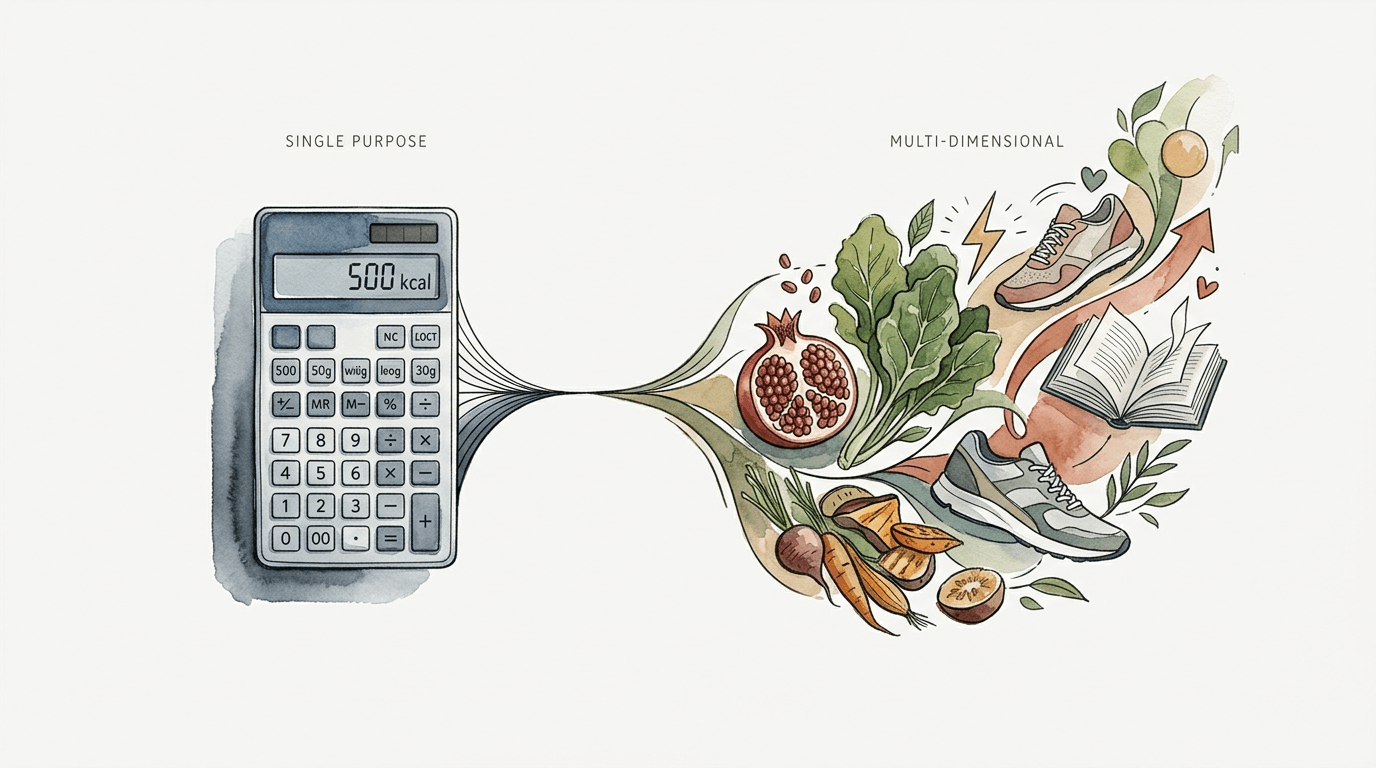
When you only see food as a number, you lose the flavor of life itself. Diet culture has convinced us that food is just a single-use utility: calories in vs. calories out. But food is also heritage, connection, joy, and healing. When we shift from viewing food as a ‘single-use’ fuel to a ‘multi-use’ life source, the obsession with the scale finally starts to fade.
You might have spent years tied to a tracking app. Every bite was a data point. Every meal was a math problem. This habit often leads to burnout, anxiety, and a complete disconnection from your body’s natural signals. Moving away from this rigid structure feels like jumping without a parachute. But there is a better way to navigate nourishment that doesn’t involve a calculator.
Learning how to stop counting calories for good is about reclaiming your autonomy. It is about moving from external rules to internal cues. This guide will show you how to transition safely, maintain your health, and finally enjoy a meal without worrying about the database entry.
How To Stop Counting Calories For Good
Stopping the calorie count means transitioning from a numerical tracking system to an internal awareness system. For many, calorie counting is a tool used to manage weight or change body composition. It exists because it provides a sense of certainty in an uncertain world. It is used in fitness communities, medical weight loss programs, and by anyone trying to understand their energy balance.
However, the human body is not a static machine. Your energy needs change daily based on sleep, stress, and activity levels. A static number on an app can never accurately capture your biological requirements in real-time. When you stop counting, you allow your body to take the lead again. You start looking at food as a complex source of vitamins, minerals, and cultural value rather than just a total of 500 units.
Think of it like learning to drive. At first, you have to stare at the speedometer and think about every gear shift. This is the “tracking” phase. But eventually, you just know how fast you are going by the sound of the engine and the feel of the road. That is what non-tracking nutrition looks like. You develop a “visual macro literacy” that allows you to nourish yourself without the overhead of an app.
How It Works: The Transition Strategy
You do not have to quit cold turkey. Most people find success through a phased approach that builds confidence. Moving too fast can trigger anxiety or lead to a “rebound” where you eat everything in sight. Instead, use these structured steps to build your internal compass.
Step 1: The One-Meal-A-Day Method
Start by picking one meal to stop tracking. Breakfast or lunch usually works best because these are often repetitive. Use the knowledge you have gained from years of tracking to eyeball the portion. Trust that you know what 20 grams of protein looks like. Do this for a full week before moving to the next meal.
Step 2: The Plate Method
Instead of weighing grams, use visual targets. Fill half your plate with colorful vegetables. Dedicate one-quarter to a protein source about the size of your palm. Use the remaining quarter for complex carbohydrates. Add a thumb-sized portion of healthy fats. This simple visual guide ensures you get the nutrients you need without a scale.
Step 3: Hand-Portioning Basics
Your hand is a portable measuring tool that scales with your body size. A palm represents protein. A cupped hand represents carbohydrates. A fist represents vegetables. A thumb represents fats. Research from major coaching organizations shows this method is nearly as accurate as weighing food but far more sustainable in social settings.
The Practical Benefits of Unplugging
Walking away from the numbers offers more than just extra time in your day. The psychological and physiological shifts can be life-changing. You aren’t just saving time; you are saving your mental health.
Studies show that intuitive eating is strongly associated with lower rates of depression and anxiety. When you stop obsessing over every calorie, your cortisol levels often drop. High stress and high cortisol are known to hinder fat loss and muscle recovery. By relaxing your approach, you might actually see better physical results because your body is in a more “rested” state.
Weight stability is another major benefit. Chronic calorie counters often suffer from weight cycling or “yo-yo dieting.” People who eat intuitively tend to maintain a stable weight over decades. This is because they aren’t constantly fighting their biology. They eat when they are hungry and stop when they are full, which prevents the binge-restrict cycle that drives long-term weight gain.
Common Mistakes and Pitfalls
The most frequent error people make is falling into the “f*ck it” mentality. They assume that because they aren’t tracking, they should ignore food quality entirely. This is not the goal. Stopping the count is not an invitation to eat ultra-processed foods for every meal. It is a shift in how you monitor, not what you value.
Another mistake is ignoring hunger cues. Some people stop tracking but keep their restrictive mindset. They try to eat as little as possible without the app, which eventually leads to a binge. You must honor your hunger. If you are hungry, eat. If you are full, stop. If you ignore these signals, the “non-tracking” experiment will fail because your brain will remain in a state of perceived scarcity.
Finally, many people forget to plan. Just because you aren’t logging your food doesn’t mean you shouldn’t have a plan for what to eat. Lack of preparation usually leads to grabbing whatever is convenient, which is often less satiating. Successful non-trackers still meal prep and keep healthy staples in the house. They just don’t weigh them.
When Precision Still Matters
Non-tracking is the goal for most, but there are specific situations where numbers are necessary. You should be aware of these boundaries to stay safe and healthy.
Certain medical conditions require strict monitoring. People with Type 1 diabetes, advanced renal disease, or specific metabolic disorders may need to track grams of carbohydrates or protein to manage their health. In these cases, the numbers are a medical tool rather than a diet culture rule. Always follow the advice of a registered dietitian if you have a clinical diagnosis.
Elite performance is another outlier. If you are a competitive bodybuilder or an athlete cutting for a specific weight class, the margin for error is slim. These individuals often use tracking as a high-precision instrument for a short duration. However, even for these groups, tracking is usually a seasonal tool, not a lifelong requirement.
Calorie Counting vs. Intuitive Eating
| Feature | Calorie Counting | Intuitive Eating |
|---|---|---|
| Primary Driver | External Data (Apps) | Internal Cues (Hunger) |
| Flexibility | Low (Rigid numbers) | High (Adaptable) |
| Mental Load | High (Constant math) | Low (Presence based) |
| Social Ease | Difficult (Requires data) | Easy (Focuses on connection) |
| Sustainability | Variable (High burnout) | High (Life-long habit) |
Best Practices for Lasting Freedom
Success comes from building habits that replace the app. You need new ways to ensure you are nourishing yourself properly without becoming obsessed.
Focus on Satiety First
Eat foods that keep you full. High-protein and high-fiber foods are your best friends. If your plate is full of fiber-rich veggies and lean protein, you naturally won’t need to count calories because your stomach will tell you when it’s done. Fiber slows digestion, and protein triggers fullness hormones.
The 20-Minute Rule
It takes about 20 minutes for your brain to receive the signal that your stomach is full. Slow down. Put your fork down between bites. Chew your food thoroughly. If you rush through a meal, you will likely eat past the point of satiety before your brain realizes you are satisfied.
Hydrate with Intention
Thirst is often mistaken for hunger. Drink water throughout the day. This isn’t about “filling up” to avoid eating; it’s about ensuring your body signals are clear. Dehydration can make you feel lethargic and crave quick energy sources like sugar. Staying hydrated keeps your metabolism and hunger signals functioning at their peak.
Advanced Considerations: Nuanced Nutrition
Serious practitioners eventually look beyond basic portions to understand the nuances of food. This is where you develop a deep, almost instinctual understanding of how different foods affect your body.
Metabolic adaptation is real. If you have been restricted for a long time, your metabolism might have slowed down. When you stop counting and start eating more, your weight might fluctuate temporarily. This is often just water retention or glycogen replenishment. Stay the course. Your metabolism will eventually adjust to the higher energy intake, leading to more energy and better workouts.
Food volume also matters. You can eat a large volume of low-calorie foods (like leafy greens) or a small volume of high-calorie foods (like oils and nuts). An advanced non-tracker understands this balance. They don’t fear fats, but they recognize that a handful of walnuts provides significant energy. This awareness allows for “gentle nutrition” where you make choices based on how you want to feel for the rest of the day.
Example Scenario: The Social Dinner
Imagine you are at a friend’s house for a dinner party. There is a large bowl of pasta, a salad, and bread. A calorie counter would be panicking. They would be trying to guess the hidden butter in the sauce and the exact ounces of pasta on their plate. They are mentally absent from the conversation.
The intuitive eater handles this differently. They scan the table. They start by filling a large portion of their plate with the salad. They take a moderate serving of pasta, focusing on the quality and flavor. They eat slowly, enjoying the conversation and the texture of the food. When they feel about 80% full, they stop.
They didn’t need an app to tell them they had enough. They checked in with their stomach, enjoyed the social connection, and left feeling satisfied rather than stuffed or deprived. This is the ultimate goal of moving away from the numbers.
Final Thoughts
Learning how to stop counting calories for good is a journey of self-discovery. It requires you to unlearn years of diet culture messaging and rebuild trust with your own body. This process takes patience, but the reward is a life where food is a source of joy rather than a source of stress.
Focus on the small wins. Celebrate the first time you leave a restaurant without checking a nutrition menu. Notice how much more energy you have when you eat for nourishment rather than for a number. Your body is an incredible system that has been self-regulating for thousands of years. It doesn’t need an app to know how to thrive.
Take the first step today. Delete one meal from your tracker or simply commit to eating one meal mindfully. Once you start tasting the flavor of life again, you will never want to go back to the spreadsheet.
Sources
1 workingagainstgravity.com | 2 eated.io | 3 triagemethod.com | 4 instituteofliving.org | 5 seehowyoueat.com | 6 avalonhills.org | 7 blackironnutrition.com | 8 eated.io | 9 harvard.edu | 10 businessinsider.com | 11 centreforintuitiveeating.com.au | 12 prevention.com | 13 nutriscan.app | 14 psychologytoday.com | 15 sooma.ca | 16 thelifestyledietitian.com | 17 asitisnutrition.com